Chimneys & Leadwork — King's Lynn & West Norfolk
Sound chimneys. Weather-tight details.
FH Roofing repairs chimney masonry and the roof details around it. From crumbling joints to leaking leadwork, we find the cause and explain whether a targeted repair, capping or stack removal makes sense.
Spot the warning signs
Damp near a chimney breast doesn't always mean the whole roof needs replacing. Loose mortar, fallen fragments and staining around the stack deserve an inspection before the damage spreads.
- Open mortar joints
- Cracked flaunching
- Loose pots or brickwork
Repointing and flaunching
We rake out defective mortar and renew joints with a mix suited to the masonry. Damaged flaunching is repaired or replaced with a shaped finish that sheds water away from the pots.
- Compatible mortar
- Sound pot seating
- Water-shedding finish
Lead flashing and soakers
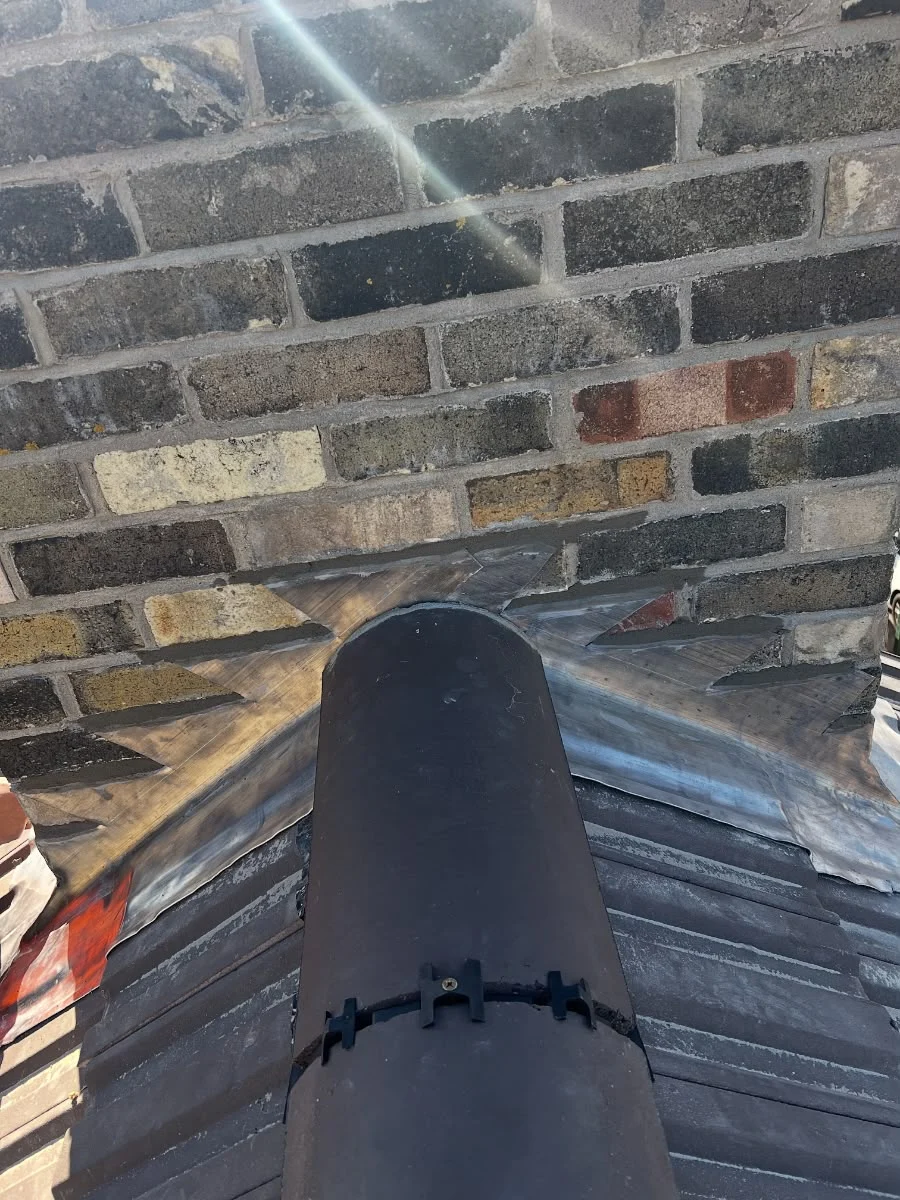
The junction between chimney and roof needs properly formed weathering. We inspect stepped flashing, soakers and the back gutter, renewing failed details in suitable lead and allowing for movement.
- Stepped flashing
- Lead soakers
- Back-gutter detailing
Capping or removing a stack
Where a chimney is redundant or unsafe, we discuss capping or removal alongside repair, allowing for ventilation, structural support and making good the roof. Fully insured, free no-obligation quotes and a written workmanship guarantee.
Real FH Roofing jobs
Our work, up close.
What chimney and leadwork repairs involve
A chimney stack is exposed to the weather on every side, so it is often the first part of a roof to show its age. Repairs can include raking out and repointing mortar joints, renewing the flaunching around the pots, refixing or replacing pots, fitting caps or cowls, and renewing the lead flashing where the stack meets the roof.
Leadwork is formed by hand to suit each chimney: stepped flashings up the sides, soakers under the tiles, and an apron and back gutter at the front and rear. Each piece has to allow for movement and shed water away from the stack.
Signs your chimney needs attention
Look for damp or staining on the chimney breast inside, mortar falling out of the joints, cracked flaunching, leaning or loose pots, gaps or lifted lead at the base of the stack, and vegetation growing from the brickwork.
Because chimneys are hard to see from the ground, it is easy to miss a problem until water gets in. A close inspection is the best way to find out what is needed.
How the job runs
It begins with a free inspection and a written quote. Safe access is arranged, the masonry and leadwork are repaired or renewed, and the roof around the stack is made good. The area is cleared afterwards and the workmanship is guaranteed in writing.
Keeping a chimney in good order
Regular checks help catch chimney problems before they cause damage. From the ground or an upstairs window, look at the top of the stack for cracks in the flaunching, loose or leaning pots, and plants growing from the joints. Inside, keep an eye on the chimney breast and the ceiling around it for damp marks or flaking paint after heavy rain.
If a chimney is no longer used, capping it with a ventilated cap stops rain getting in while still allowing air to move, which helps prevent damp inside the flue. Where a stack is unsafe or not needed at all, taking it down below the roof line and re-tiling over it is another option.
Free, no-obligation quote. Guaranteed in writing.
Areas we cover
- King's Lynn
- Downham Market
- Hunstanton
- Heacham
- Dersingham
- Snettisham
- Swaffham
- Fakenham
- Wisbech
- Watlington
Common questions
Your questions, answered.
Can a chimney leak even when the roof tiles look sound?
Yes. Failed flashing, damaged lead soakers, open mortar joints or cracked flaunching can all let water in around the stack. We inspect those details rather than assuming the tiles are to blame.
What's the difference between pointing and flaunching?
Pointing is the mortar between the chimney bricks. Flaunching is the shaped mortar around the pots at the top of the stack, designed to shed rainwater.
Can you cap an unused chimney?
Yes. An unused flue still needs ventilation, so we fit a suitable ventilated cap. A flue that's still in use must never be blocked.
Can you remove a damaged chimney stack?
We assess the stack, access and surrounding roof first. Shared ownership, structural support and any permissions need checking before removal goes ahead.
Free quote
Ready for a free, no-obligation quote?
Free inspection, honest advice and a written quote. Fully insured, with a written workmanship guarantee.